It’s All Relative: Gaining Perspective in Maintenance Mode

After twenty-odd years of respiratory emergencies, bizarre infections, and multiple body systems going haywire at the same time, I am used to crisis mode. I studied for finals and wrote newspaper articles from the ICU in college, backpacked through Europe with a broken ankle and torn ligaments, and taught undergraduate writing classes so fresh from the hospital that I still had an IV in one arm and a hospital bracelet on the other.

My attitude matched my actions. During ambulance transport, I cracked jokes through an oxygen mask. I referred to spells where I was too run down to even leave the house as my “Boo Radley” days, and when innocent phlebotomists entered my hospital room to draw blood, I serenely offered them my ankles since they’d be hard-pressed to find a vein anywhere else.

And then something happened.

I got better diagnoses, more targeted treatment plans, and doctors who managed to unravel the thorny mess known as my medical history. I entered a hitherto foreign place known as maintenance mode. I wasn’t healthy in maintenance mode, but I was stable. Instead of the cycle of crisis-recovery, crisis-recovery that had shaped most of my life, I had series of so-so days punctuated by the occasional really good or really bad day. The difference was that the really bad days were not nearly and difficult as they had been, and the really good days were markedly better.

Sounds great, right? And it was. But it was also hard. I simply didn’t know how to exist without a constant barrage of setbacks and calamities, and I’d never had the downtime to evaluate how my baseline health status had changed over the years. While it was wonderful to not be in and out of the hospital as often, it was almost as tough to see for the first time what “everyday” health meant for me. Most days, I did have a hard time breathing, and that was never going to change.My energy level was still pretty low, but I began to see that the more carefully I planned my activities, the more successful they were. I stopped looking at life in terms of “getting back to normal” and realized that this new reality was my normal. There was no drama to eclipse the hard facts anymore.

It took awhile for me to relax enough to start making weekend plans with my friends again and be confident I’d feel well enough to attend. Slowly, I went through “re-entry” into the world of the healthy, and found my position within that world. While the wheezing and congestion had worsened over the years, they now fit in around teaching, writing, and getting to the gym. My daily chest PT visits were no longer my only contact with the outside world but were routine activities I scheduled into my busy days.

Maintenance mode, then, was largely about accepting realities that were so easy to ignore in the flurry of ER visits, CT scans, and IV lines. It was also the first time I’d really seen how skewed my understanding of “crisis” was. If I wasn’t turning blue from lack of oxygen or having some sort of cardiac episode, then that meant there was nothing really wrong, which I now see is a dangerous lack of a middle ground.

Luckily, I have an exceptionally healthy husband who helps in the ongoing process of defining things for me. Things like bronchitis, pneumonia, or kidney problems don’t faze me, but they certainly faze him. Somewhere in between my laissez-faire attitude towards anything short of near-death and his usual interaction with sickness—a seasonal cold or allergies—is the common ground I need to survive as well in maintenance mode as I do in crisis mode. The choices I make for my health no longer completely usurp the choices I want to make for my spirit and because of that, I no longer resent them.

Facebook Twitter Email

What I Learned from my Defective Family Tree, Lesson 1: Stubborn or Stalwart?

One of the hardest things about being chronically ill is learning to ask for help. Our conditions are not going away—or else they wouldn’t be chronic, would they?—and as much as it’s frustrating, even sometimes embarrassing, to have to ask for and rely on the help of others, it’s a must if our goal is to maintain optimal health.

Don’t think I was always this sane and logical. In fact, I rarely am and it is a constant battle to re-draw that fine line between being independent and self-sufficient and being…well, stubborn and foolish. After all, when I overdo it, I am the one who suffers most. Why not admit when I need a hand doing the grocery shopping or cleaning the house, or voice when it would make a huge difference if we went out somewhere close to my house so I didn’t have to drive a long distance? If I don’t speak up, I will suffer for it, whether that means my muscles get weak and sore from adrenal depletion or the extreme fatigue of low oxygenation washes over me.

Since my health status changes practically by the hour, sometimes the best-laid plans fall to the wayside and things I thought I could accomplish alone are no longer possible. Because the only predictable thing about chronic illness is its unpredictability, I need to be able to adapt just as readily as my body dictates.

Luckily for me, I am not only a medical freak, I come from an equally bizarre family. My mother has rheumatoid arthritis and degenerative bone disease, and my father is a cancer patient, heart patient, diabetic, and one of the few people I’ve ever heard of who suffers from polymyositis, a rare neuromuscular disease.

Yes, the fruit doesn’t fall from the genetically defective tree, does it?

However, there’s an upside to my dubious lineage. Except for my older brothers, who are pretty healthy, we’re all patients. But the flip side of that means we’re all caregivers too, depending on who needs it most. When I am in respiratory failure, my mother eschews her searing back and shoulder pain and sits by my side in the ICU. When I am having a good day and she is not, I drive her around to do her errands and help fold her laundry. When my father overdoes it and his fatigued muscles cannot move anymore, I scold him into resting and order him to cancel his plans and take a nap.

Oh, the irony. The very things I find so hard to do are so easy to tell other patients to do! I could either remain the world’s biggest hypocrite—I once conducted a conference call from a bed in the ICU, face mask and all—or I could take some of my own advice, advice I can’t go a few days without hearing from my mother or father.

In a family of patients where everyone needs help now and then and every condition is relative, you can’t get away with too much. Someone will call me on my lunacy and my tendency to work solely in overdrive just as quickly as I would for them.

Turns out, the best way to ask for care is to know how to give it, too.

Facebook Twitter Email

Preventative Medicine in a Chronic World: The Illogical Logic of Health Care

You only need look on the cover of any number of mainstream magazines or flip through the newspaper to see how much discussion there is about chronic illness in our country. Football stars appear in television ads for asthma prevention, and well-packaged ads plugging medications for long-term conditions grace our screens so often nowadays that I can recognize their corresponding theme music from the other room.

With this increased awareness of chronic illness is an understanding of the economic impact of such long-term medical problems. Lots of people are living longer and living with conditions that require a lot of care. According to the Healthy People 2000 Final Review, put out by the Department of Health and Human Services, the direct medical and annual costs attributed to these conditions total more than $3 billion, or four percent of the nation’s gross national product.

That’s a whole lot of money at stake, and as much as I hate to admit, the business of health care is, above all else, a business. Does that strike anyone else as a monumental—and inevitable—conflict of interest?

The logical thing would be to provide as much preventative care as possible, right? The more we can control our symptoms and the progression of our diseases, the less likely we are to need longer hospital stays, costly surgeries, and additional medication. It’s a win-win situation—we are healthier and happier patients and insurance companies save money when they don’t have to cover skyrocketing hospital bills and expensive procedures. Overcrowded and overworked hospitals would even benefit if chronically ill people like myself weren’t always clogging their wards.

But it doesn’t work like that. Let’s take the example of my daily chest physiotherapy (chest PT) since I’m currently embroiled in a messy battle to get it covered. Chest PT involves a vigorous “clapping” the lobes of the lungs in eleven different positions by a trained professional to dislodge the mucus that collects in the lungs. Since my lung diseases mean mucus and infection build up in my lungs each day, chest PT is an essential component of my treatment plan—without it, my infections linger longer and get much worse, often leading to respiratory distress or even respiratory failure.

Before I got correct diagnoses for my lungs and I didn’t have chest PT, I spent weeks and weeks in the hospital each year, including stints in the ICU for collapsed lungs and pneumonia. Let me tell you, several days in the ICU and multiple x-rays, procedures, tests and monitors doesn’t run cheap. Multiply that by several trips, and it runs into thousands and thousands of dollars.

You’d think then, that my insurance company would rather pay for the much-cheaper daily chest PT and help keep me healthy than wind up paying truly shocking amounts of money when I am constantly in and out of the hospital. Surely such a sound preventative measure makes sense both financially and in terms of common sense.

But no. I’ve changed health plans five times in seven months due to employment changes, and each time I switched, the worse it got. One company refused to cover any chest PT after two weeks’ worth of sessions, and another wouldn’t even do that. It offered to send a therapist out once to train a family member, leaving arguably the most critical part of my treatment plan in the hands of well-meaning people who didn’t know how to use a stethoscope or locate any of the lung’s lobes.

After months of phone calls, faxes, and letters of medical necessity from my doctor, I finally won a battle, but winning the war is looking increasingly futile. I have coverage for three sessions a week for four months, but since they decided to apply it retroactively, I really only have coverage for another month. After that, no one knows what will happen, and even with this small victory, my husband and I have already shelled out $2100 towards chest PT in the past several months.

I wheeze more, I’ve had more viral infections and decreased oxygen saturation, and I’m running out of money—and I am still one of the lucky ones who even has health care. The chronically ill population is only going to grow—hopefully, there will come a time when attitudes towards our care with evolve with us.

Facebook Twitter Email

Confessions of a Former Asthma Patient

I found out the other day that I probably don’t have asthma. After the lab results came back, apparently there was “no clincal evidence” of an asthmatic reaction in my blood, though the final verdict is still out. Great news, right? The wheezing, the coughing, the inhalers and nebulizers, the trips to the emergency room, the steroids, all the things that make asthma difficult—does this mean I get to kiss them all goodbye?

Not quite. On the one hand, yes, it is great to know that after 25 long years, I might not have to keep the term “asthma” on my lengthy list of medical conditions. Hopefully I can phase out the strong steroids I’ve had to take to control my breathing. A lifetime of steroid use has wreaked havoc on my body: brittle bones, thyroid and metabolic problems, an enlarged liver and spleen, and most recently, adrenal depletion.

But the thing that totally stinks about not having asthma is now knowing that I may never had asthma. Let me explain. I didn’t get the correct diagnoses of primary ciliary dyskinesia (PCD)—a rare genetic disorder that means I do not have the working cilia that are supposed to keep the lungs clear of mucus and debris—and bronchiectasis—the stiffening of the airways that leads to further mucus and infection—until I was 23.

Before that, I spent a lifetime battling symptoms that everyone told me could be explained away by my asthma: frequent infections, thick mucus I coughed up every day, collapsed lungs, constant hospitalizations, respiratory distress/failure, numerous ear and nose surgeries. Yet every time I showed up in the hospital, I was told there was no reason for my “exacerbations of unknown origin” if I was taking my medication. They gave me steroids and the sicker I got, the more steroids they gave me. By the time I was in college, I was spending weeks out of each year in the hospital, sometimes in the ICU, while steroids continued to damage my body.

The older I got, the more insistent I became that my asthma diagnosis didn’t reflect my symptoms or my daily life. My body was telling me one thing, and the specialists were telling me another thing altogether. After endless tests and biopsies, when I finally got the diagnosis of PCD and bronchiectasis, it was the first time my experience of illness actually matched my diagnosis of illness. At the time, we thought that the asthma was a small contributor to the real culprits, so I stayed on my inhalers and medications.

And then after a winter of lingering infections and different courses of antibiotics, my new doctor spun around in his chair and asked me a few weeks ago if I thought I even had asthma. “That’s the million dollar question, isn’t it?” I asked, shocked by the absurd irony. And when the test results came back showing no sign of an asthmatic reaction to an infection, it was bittersweet news.

It’s great that I can now focus on the medications that will target my infections, not my asthma. But it’s frustrating to know that because I was shoved into a diagnostic box that clearly didn’t fit my symptoms, I spent a lifetime on toxic drugs that I might not have needed in such large doses if I’d known what was really wrong.

Turns out my body was right all along, and while I’m glad I followed my instincts, I am even more glad I found a physician who knew the right questions to ask.

Facebook Twitter Email

Professional Services

I am an experienced freelance writer available for ongoing consumer health, corporate, and editorial work. In addition, I do copy-editing, developmental editing, and I also consult on book proposals, social media projects, and application essays and personal statements. I also offer academic writing support.

For a comprehensive summary of my professional writing, editing, and consulting services, please e-mail me at laurieDOTedwardsATgmail.com.

For a comprehensive summary of academic writing support and application essay consultation, please e-mail me at laurieDOT edwardsATgmail.com.

Lastly, I speak at conferences and lectures about issues related to chronic illness, publishing, and social media. Please contact me if you are interested in having me at your event.

Facebook Twitter Email

Press

Press

Radio and Print – Interviews/Publicity

Facebook Twitter Email

Select Writing

Select Writing

“Less Than Perfect,” Boston Globe Magazine

“Leaps of Faith,” Boston Globe Magazine


Less Than Perfect

A young woman discovers that revealing a secret can be more powerful than making a “good” impression.

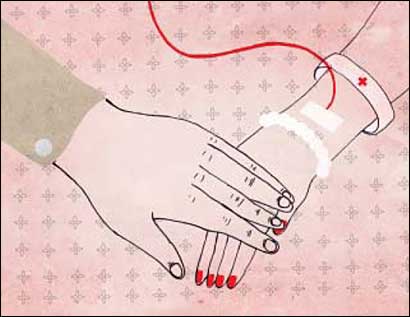
holding hands with an IV
(Illustration / Christopher Silas Neal)

By Laurie Edwards | January 8, 2006

I met John at the coat check of a downtown bar where I was hosting a New Year’s Eve party. We chatted briefly, just long enough for him to notice my smile and for me to notice his startling blue eyes. Hours later, we found each other again, just in time for the midnight kiss. Sound too good to be true? Of course. It all happened, but the real story is always more complicated.

I had spent the afternoon debating whether I should even attend my own party. I had been released from the hospital just two days earlier and was completely exhausted. As unwelcome accessories to my black cocktail dress and long hair pulled up, my arms were trailed with deep purple bruises, remnants of collapsed veins from IV insertions. I have bronchiectasis, a chronic condition, meaning bacteria and mucus collect in my lungs, causing infections, decreased oxygenation, and frequent hospitalizations. I’d just spent Christmas in the hospital, as well as Thanksgiving and several weeks of September and October. I was more interested in recovery than romance.

“What happened to your arms?” John asked as we moved from the edge of the crowded dance floor. I pulled at my wrap, which had slipped down around my elbows.

Emboldened by champagne and weary of the charade I had carried on all night—all my life, really, in situations like this—I did something I’d never done before with a cute, friendly guy I might actually want to see again: I told the truth. And instead of discreetly excusing himself as I expected, John asked for my phone number. Instead of the total regret that I expected, I felt a tiny twinge of relief.

Like most 20-somethings, I wanted to be vibrant and appealing, not weak and sickly. The pills, tests, surgeries, and daily sessions of physical therapy that make up my life are not exactly dating-friendly. What guy wants to hear about medicines and mucus over martinis?

My friends and family knew all about it. They visited me in the hospital, brought me tea and trashy magazines, and watched hospital cable with me. But in the dating world, first impressions in bars often mean only impressions, and chronic illness didn’t fit easily into that scene. So I cultivated the art of casual conversation, perfected the ability to deflect personal questions, and avoided the very topic I felt defined me.

In the back of my mind were the words said a few years earlier by a man I had cared about: “Thinking of your life stresses me out. I can’t do this.” Careless words, but they resonated. I didn’t think someone new would ever want to get involved with me when there were plenty of healthy people around. I gave John my number doubting he would call.

But he did call, and within a couple of weeks, we had already bypassed the need for what my friends call the “RDT”—relationship-defining talk. Given our obvious feelings for each other, the idea of affirming our exclusivity was ludicrous.

As a new couple, we survived our first dinner with my parents, our first real fight, and our first “I love you.” But soon into it, we also experienced our first surgery together, our first emergency room crisis, and a slew of messy infections.

I waited for the reality of it all to overwhelm him, for my illness to crowd him right out of our relationship. I told myself I would understand if it did.

“None of this is ever going away, John. Wouldn’t you rather be with someone healthy?” I asked one cold winter day. I spoke with the halting confidence of someone who knew the answer but needed to hear it anyway.

“No, because then it wouldn’t be you,” he said without hesitation.

And with that, I started to get over myself. A quirky habit, a misshapen body part, a childish and irrational fear—we all have something we want to keep hidden, something we fear will diminish us in another’s eyes. It wasn’t John’s perception of my illness that threatened to hold our relationship back; it was my own.

© Copyright 2006 Globe Newspaper Company.


Leaps of Faith

When you’re about to get married, a divorce in the family really shakes things up.


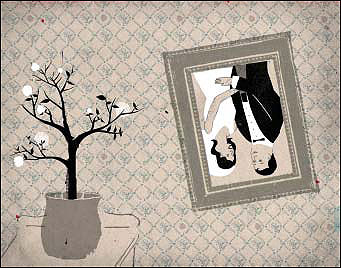
(Illustration / Christopher Silas Neal)

By Laurie Edwards | April 9, 2006

The day my fiance, John, and I were scheduled to pick out our wedding invitations, we spent the morning helping my brother move out of his house. He had just announced his divorce, and by the time we loaded the first suitcase, we knew switching gears from packing up the remnants of a family to debating font sizes and ribbon width would be impossible.

We drove home instead of going to our appointment. I cried; John stared straight ahead. As we neared my street, we started to argue over whose method of grieving was more appropriate: Mine was too emotional, his too rational.

Once the fighting began, it lasted for several weeks. We fought about little things like radio stations and movies and big things like money and kids. We even fought about fighting: who started it, whose tone was more condescending. To outsiders, we tried hard to be the same smiling couple we’d always been, but in private we hardly recognized ourselves. The irony of that point wouldn’t hit me for weeks.

We were upset about the divorce, of course, not the radio, and we were arguing out of fear, not anger. Every now and then, we’d stop and reassure each other by saying, “Never us.” But deep down lingered the question: No one gets married thinking they’ll wind up divorced. What makes us different?

John and I had said “I love you” within a few weeks of meeting. On a hazy August night just seven months later, he proposed. As if by magic, as he stood up to place the ring on my finger, the band began to play our song, “Our Love Is Here to Stay.” John swore he hadn’t planned it. We were convinced we were meant to be.

Intellectually, I knew the statistics were not promising, but emotionally they had little impact on me, since divorce had always been something that happened to other people. Suddenly, we couldn’t hide behind an abstraction anymore, and my brother’s divorce was so real it threatened to destroy our relationship. The thing is, marriage is never really just about two people. When we say “I do,” we bring all the people who matter most into the union with us.

It’s convenient to look back and say we had some inkling of their divorce, but we really didn’t see it coming. No one did. In fact, we’d just asked my brother and his wife to be in our wedding. I had grown up watching them, and they were the kind of couple I had hoped John and I would be.

Like all couples marrying in the Catholic Church, John and I had completed a marriage prep course where we earnestly tackled issues like finances, child rearing, spirituality, and sexuality. We were confident in our compatibility, but until confronted with the divorce, we hadn’t thought about what would happen if we strayed from those points of agreement. Because of my brother, we were forced to have some tough conversations that would have been easy to avoid otherwise. We hated that our lesson was at the expense of our family’s pain, but we left that phase of our relationship with more strength and less naivete than we had before it.

Joining your life to someone else’s is the biggest risk there is. So why do it, especially given the bad odds? The only guarantee you can have is the knowledge that you love someone. That’s what John and I had when we ultimately married; that’s what my brother and his wife had had; that’s all anyone really has. I have to believe that that knowledge alone is worth the risk. There will always be the chance for failure, but there will always be the chance for success.

As newlyweds, when we think about our future, we think of it in terms of how each of us will grow without our growing apart. Love deepens; it bends and changes to be what we need most, even if we don’t always see that right away. It will grow with John and me if we give it the chance, and that’s all we need to know.

Laurie Edwards is a writer based in Boston. E-mail comments to coupling@globe.com.

© Copyright 2006 Globe Newspaper Company.

Facebook Twitter Email

About The Book


Life Disrupted

“Twenty-seven-year-old Laurie Edwards is one of 125 million Americans who have a chronic illness, in her case a rare genetic respiratory disease. Because of medical advances in the treatment of serious childhood diseases, 600,000 chronically ill teens enter adulthood every year who decades ago would not have survived—they and people diagnosed in adulthood face the same challenges of college, career, and starting a family as others in their twenties and thirties, but with the added circumstance of having chronic illness.

Life Disrupted is a personal and unflinching guide to living well with a chronic illness: managing your own health care without letting it take over your life, dealing with difficult doctors and frequent hospitalizations, having a productive and satisfying career that accommodates your health needs, and nurturing friendships and a loving, committed relationship regardless of recurring health problems. Laurie Edwards also addresses the particular needs of people who have more than one chronic illness or who are among the twenty-five million Americans with a rare disorder. She shares her own story and the experiences of others with chronic illness, as well as advice from life coaches, employment specialists, and health professionals. Reading Life Disrupted is like having a best friend and mentor who truly does know what you’re going through.”

Order your copy from Powell’s Books or Porter Square Books

Also available on Amazon

Follow Life Disrupted on Facebook


What people are saying:

“…Wise, generous, and a terrific storyteller.” Publisher’s Weekly

“Order this gem pronto.”
Library Journal, starred review


“As a person living with a chronic illness, it is inspiring to hear such a fresh and important voice. Laurie Edwards puts adversity in its place and teaches us to not only go on living, but to create a better life. High five, sister!”—Kris Carr, author of Crazy, Sexy, Cancer

“Eloquent and funny. If you’ve experienced chronic illness, or if you care for someone who has, you need to read this book.”—Amy Tenderich, coauthor of Know Your Numbers, Outlive Your Diabetes (www.diabetesmine.com)

“Chronic illness needn’t change your life for the worse if you let Laurie be your guide to everything from doctors to dating to why we sweat the small stuff (because sometimes that’s all we feel we can control). Laurie Edwards is a compassionate confidante, an understanding friend, and a witty chronicler of all things chronic illness, even the not-so-pretty parts. Bravo!”—Susan Milstrey Wells, author of A Delicate Balance: Living Successfully with Chronic Illness

“For those young people suffering from chronic illness, Life Disrupted offers strategy, advice, and hope. For those of us lucky enough to grow up without illness, it tells us how to be respectfully helpful to friends, family, and colleagues in this situation. Superb and engaging writing.”—Paul F. Levy, president and CEO of Beth Israel Deaconess Medical Center, Boston and founder of www.runningahospital.blogspot.com

“A wise and valuable addition to the literature on chronic illness, illuminating with verve and wit the particular struggles faced by young adults. Ms. Edwards is a delightful and seasoned guide. She knows what the issues are, how to decipher them, and how to live a rich life while shuttling between hospitals and high heels.”—Dorothy Wall, author of Encounters with the Invisible: Unseen Illness, Controversy, and Chronic Fatigue Syndrome

“Laurie Edwards is a generous writer who describes with grace and clarity how she has learned to live with multiple chronic conditions. This book is a gift to young people who are navigating chronic illness, school, and their new adulthood all at once.”—Jessie Gruman, author of AfterShock: What to Do When the Doctor Gives You—Or Someone You Love—a Devastating Diagnosis

“Laurie Edwards is a life-enhancing writer. If you’re a person with chronic illness, you should always keep this wonderful book handy.”—Sarah M. Whitman, M.D., psychiatrist specializing in chronic pain management (www.howtocopewith pain.org.)

“Laurie Edwards has written a moving and meaningful description of the issues that people face when they live with unpredictable and debilitating disease. Her words reminded me of my own struggles—and her laughter helped me remember the good times, too.”—Rosalind Joffe, author of Women, Work, and Autoimmune Disease: Keep Working, Girlfriend! and president of Chronic Illness Coach

“Both a practical and a philosophical guide for those navigating this heretofore uncharted territory.”—Lynn Royster, J.D., Ph.D., director of The Chronic Illness Initiative at The School for New Learning at DePaul University

Life Disrupted is moving and often humorous, as Laurie Edwards informs readers about how they can navigate successfully through the medical storms, live well, and maintain fulfilling relationships.”—Douglas Whynott, author of Giant Bluefin and A Country Practice

“The time for patient empowerment has come and Laurie Edwards’ voice is leading the way. As a fellow lifelong patient, I appreciate her honesty in disclosing private patient moments which reflect the often unspoken truth of living with chronic illness.”—Tiffany Christensen, author of Sick Girl Speaks!: Lessons and Ponderings Along the Road to Acceptance (www.sickgirlspeaks.com)

Facebook Twitter Email

About Me

Laurie Edwards

I’m a 31-year-old writer trying to balance multiple chronic illnesses (PCD, bronchiectasis, celiac disease, etc) with, you know, the rest of my life. My first book, Life Disrupted: Getting Real About Chronic Illness in Your Twenties and Thirties (Walker), was named one of 2008’s Best Consumer Health Books. I am currently working on my second book.

My essays and articles have appeared in the Boston Globe, Glamour, and many other print and online outlets. A Chronic Dose was named one of Health Central’s Top Sites for Pain in 2007, and was featured in Wired.

I have a BA from Georgetown University, an MFA from Emerson College, and I am a full-time lecturer at Northeastern University. I live in the Boston area with my husband, our daughter, and two rescue mutts.

Facebook Twitter Email