Navigating Work-Life Balance by Asking for What You Need (Part 1)

Picture this: You are young, you are ambitious, and you have big plans for career. Suddenly, chronic illness manifests itself, and everything changes. Now, you’re not simply a novice employee trying to make your mark, but you’re trying to figure out what’s going on with your body, how to hide your symptoms so you don’t look unreliable, and you aren’t sure how you can make all this work.

Sound familiar? The please read Leah Roman’s story below, in her own words, and share your experiences. It’s an insightful and thoughtful look at one woman’s journey in the professional world, and I think many of you can relate to the building tension and frustration in her story.

* * *

In January 2006 I was 25 years old and very busy! That month I graduated with my Master of Public Health degree, started my first “professional” level job in the field, and landed in the emergency room with what I would later realize was the initial flare up of my chronic illness. I had swelling in my face and neck. I had hives. I had started having strange reactions to foods. I had a low-grade fever. In short- I felt terrible. Convinced it was simply an allergic reaction; the doctors pumped me full of Prednisone and Benadryl and sent me on my way.

I remember feeling paralyzed with anxiety during that time. How would I tell my new boss of two weeks that I needed to take a sick day? How would I ask her for the hours of sick time necessary to accommodate the follow-up appointments and tests to address my symptoms that simply would not go away? What if I eventually got too sick to work? I was single and needed to work full-time to keep my health insurance.

Since 2006 I have been operating with a “working diagnosis” of Undifferentiated Connective Tissue Disease (UCTD) to account for my joint pain, fatigue, sun sensitivity, and rashes. The chronic fevers, flushing, and food sensitivities remained a bit of an outlier until two years ago. I was referred to a talented autoimmune dermatologist who finally attributed that group of symptoms to a mast cell activation problem. The way she explained it was that my mast cells (the cells in your immune system that make histamine) “behave badly” and react to things they shouldn’t (e.g., food, heat, and sun). While there remains some debate about which symptoms are attributed to which condition (and whether I meet all the criteria for each), I have responded well to the updated cocktail of rheumatologic and antihistamine medications.

The first few years of work with this chronic illness were the hardest. Being young and naïve in the workplace, I did not always know my rights in terms of privacy. I did not always know how much to share and how much to keep private (especially when asked a direct question about my health by a supervisor). When I first got sick, I only ate food that I brought from home (due to my new food reactions). Several co-workers, to my face and behind my back, speculated that I must have an eating disorder- what else could explain my weight loss and refusal of catered or communal food?

In Laurie’s new book In the Kingdom of the Sick, I felt especially connected to the section about the workplace. Chronic illness symptoms do not always meet the criteria for a disability. Therefore, you may not be eligible for a formal accommodation. As she also points out, one of the major challenges is that your symptoms are often inconsistent- you may need an accommodation one day and not the next! And what about asking for accommodations for diagnoses that are unknown or tentative? Many of us wait years and years to get the correct diagnosis.

I found that I needed accommodation around issues that did not seem “normal” to my co-workers. For example, early in my career I declined an invitation to a staff sporting event being held on a near-by athletic field. Since it was being held outdoors in July (without shade), I had to decline. I declined because my extreme sun sensitivity can trigger fevers, rashes, and full-on flare-ups. Although I tried to explain the severity of my situation, I was told by my supervisor “You better start going to these events or people will think you are not a team player.” I received similar “warnings” over the years when I declined work dinners or parties where I was unable to eat the food and/or too fatigued to stand all night at an event after working all day.

I think it can be difficult for those without chronic illness to understand the intricate level of planning it can take to navigate a “normal” day at the office. For example, I have lived with low-grade fevers for seven years. When I shop for work clothes, my focus is primarily on finding layering options that can allow me to get down to short sleeves at a moment’s notice if my temperature begins to rise. I often “pre-treat” myself with Tylenol prior to an important meeting to ward off a fever and its resulting flushing. The experience of severe chronic flushing at work silenced me during meetings for many years.

I also spend a lot of time protecting myself from the various “hazards” in my physical environment. Having spent much of my working life in Boston and Philadelphia, I have worried about the health of several old buildings which have housed my offices. Some spaces have had a history of mold or water damage. How does that environment affect my poor easily activated mast cells? I have had reactions set off by colleagues sitting in close proximity while wearing strongly scented perfumes or lotions. And then there is the art of dodging co-workers who insist on coming to work sick and putting colleagues who take immune suppressant medications at an unfair risk for illness.

And finally, while it is exciting to be invited to present and attend conferences…work travel can be treacherous with a chronic illness! From the physical strength needed to maneuver your suitcase, to trying to stay on the eating-exercise-medication schedule that keeps you in balance…it can be exhausting. I once traveled to Missouri to co-facilitate a training. At the last minute, I discovered that I could not eat the meal options being provided by my host organization. As a result, I was up at 5am to visit the grocery store to purchase all the “Leah-friendly” food I would need to survive for the next two days.

To be fair, for each challenge and difficult situation that I faced in the workplace, there was a sensitive friend/co-worker/mentor/colleague that I met in my offices and travels as well. These people grabbed my suitcase and hoisted it into the overhead without asking; they sat apart from the group just to have lunch with me in the shade; they strategically steered colleagues to choose a restaurant where they knew I had safe food options; they did not ask why my schedule was a bit more flexible that everyone else’s. I am incredibly grateful for the kindness and friendship of every single one of these people.

I have spent the last seven years balancing these challenges and victories in an ongoing debate about my ideal work situation. Finally, I approached a turning point in August 2012.

Want to see how all of this resolved? To be continued….

Chronic Illness, Employment, and Kickstarting Your Career

One question that has come up in several In the Kingdom of the Sick posts—including this great Q&A over at DiabetesMine—is how disability rights have influenced chronic illness, particularly in the work place. Navigating chronic illness as a working professional is something I talk about extensively in my first book, Life Disrupted, and is something I’ve posted about here, too. I am not surprised I’m getting lots of questions about illness disclosure, the Americans with Disabilities Act, and how to balance health demands with professional obligations, since chronic illness can have such a significant impact.

A lot are specific to employment in young adults with chronic illness: how do you begin a career under these conditions? I know how frustrating it can be to feel like everyone around you is moving towards something when you feel like your body is falling apart, and so are your aspirations. There are so many trade-offs, compromises, and sacrifices to sift through.

With this in mind, I am really excited to kick off what will be a three-post series this week all about careers and chronic illness. This coincides nicely with the launch of my friend Rosalind Joffe’s new coaching program, Kickstart Your Career. It’s designed specifically for patients in their twenties and thirties, and comes from someone who’s walked the walk—Rosalind was a younger adult herself when she was first diagnosed with multiple sclerosis, and she’s spent years helping patients with chronic illness stay employed.

So click on over, and then be on the look out—tomorrow, I am posting the first of two posts from a guest blogger who has made these same compromises and sacrifices in her professional career. Several interviewers have asked me how I balance my career, health, and family needs and the short answer, partly in jest, is that lately, I never sleep. The longer answer is that I am able to do what I do because as a writer and an instructor, I have some built-in flexibility. I can write at 1am or 4am if I need to, I can comment on papers electronically from the hospital bed as well as I can from my desk, and I am not on campus five days a week. I make a lot of sacrifices to keep everything on track, but I can choose to do that because I also have a supportive partner and work for an extremely accommodating and encouraging institution.

Not every profession lends itself to flexibility so naturally, and not every institution can be as accommodating with scheduling. As such, I am excited to share Leah Roman’s journey, and know it will resonate with so many of you out there.

The Flexitarian (or, Nutrition and Chronic Illness, Part 1)

In the wake of the book’s release, I’ve talked a lot about gender and pain. In a social history of chronic illness, gender and pain is indeed important to the storyline, but it is just one of many themes.

One question I’ve gotten is, what about the role of nutrition and lifestyle?

The short answer is that you simply can’t talk about how changes in the way we work, live, and spend our time—a recurring theme of industrialization and innovation—without looking at the influence of nutrition and diet. Some of the most common and costly chronic diseases, like cardiovascular disease and type 2 diabetes, are so closely linked to lifestyle. In many ways, this can be empowering, because it means there are concrete things we can do to prevent or mitigate conditions that don’t involve medication and intervention.

The longer, more complex answer is that of course, it isn’t always as simple and easy as that. Health literacy, socioeconomics, and many other factors go into it. (There is a much more eloquent discussion of all of this in the book, thanks to some insightful interviewees.)

People are incredibly passionate about nutrition and diet, whether it’s Atkins or Paleo or WFPB (whole foods, plant-based). I have celiac disease, so I know firsthand the power what we eat has in terms of improving our health. I’ve also routinely gone dairy-free; I am not lactose intolerant but cutting out dairy helps reduce mucus production. I know that eliminating certain foods can be incredibly liberating, and that even if you don’t have an allergy or food intolerance, choosing to eat a particular way can absolutely make you feel better.

To that end, I’ve been loosely following Mark Bittman’s “vegan until 6pm” mantra for a few years now, and over the past several months, I’ve slowly been adding in more vegetarian family dinners: butternut squash chili, peppers stuffed with quinoa and vegetables, garlic, cumin, and chili pepper roasted chickpeas (a toddler favorite—she has an eclectic palate), etc.

I don’t envision a point where all my protein sources will be plant-based, for pragmatic reasons. For example, my daughter loves salmon and we usually share a serving, so I wouldn’t want to cut that out, and I don’t always have the time to make separate meals. Sometimes, after a day of working, running around with a toddler, chest PT, then working all night again, it’s just easier to eat some (healthfully prepared) chicken, you know?

But still, I am definitely increasing my plant-based proteins and while I don’t eat a lot of processed foods (remember, I have celiac, and I don’t buy into packaged foods that are originally made with gluten and then are reformulated with GF ingredients), I am more conscious of selecting whole foods.

You can imagine my pleasure this week, when I stumbled upon Mark Bittman’s new column, The Flexitarian, and his measured approach towards a diet high in plant-based protein. While I am sure there are critics of the name itself, the philosophy here resonates since it’s what I’ve been gradually working towards on my own.

Interestingly enough, I read the column the same week I had the chance to interview Dr. T. Colin Campbell, author of The China Study and the forthcoming Whole. If you’ve heard of his work, then you know Dr. Campbell’s research suggests many chronic diseases can be either prevented or reversed through eating a whole food, plant-based diet. Keep an eye out for interview material and my thoughts on Whole–so far, it is engrossing.

I recently read an extreme comment on an article that said something to the effect of, nutrition is at the heart of everything and there is simply no reason for anyone to live with chronic illness. My gut response to that was, well, what about people with genetic or autoimmune disease? Would a change in nutrition suddenly grow working cilia for me? Or, isn’t it problematic to place the “blame” for lupus or multiple sclerosis solely on nutrition?

So as a preview of this discussion, I think you can acknowledge the enormous impact of diet on costly and preventable chronic disease without putting unattainable expectations on whole populations of patients. I also think that no matter what conditions you have or what causes them, the better you eat, the better you will feel, and I also think that conscious nutrition choices can do a lot to improve symptoms of existing disease.

What’s your gut reaction? More soon!
One Week in April

I hadn’t intended on last week’s silence, but it was an intense time up here in Boston. In the midst of much sadness, shock, and anxiety, writing about anything else just didn’t feel authentic.

So much has been written about the Boston Marathon bombings and subsequent manhunt and lockdown, so instead I offer this powerful, poignant video from Boston.com, Five Days in April. It is stunning and sobering, and absolutely worth a view.

One week out, what I can say is how proud I am: Of my city and all the many ways its people have cared for each other, and showed their love of country; of my students, some of who were medical volunteers at the finish line when the bombs went off, who have taken care of each other and handled this situation with grace; of all the doctors, nurses, EMTs, and health care providers whose skill, preparation, and precision saved so many lives; of the many branches of law enforcement who worked together to keep us safe, and of the crowds who lined the streets to show their gratitude.

And as a writer, yes, so proud of my hometown newspaper the Boston Globe, whose reporters, editors, photographers, and staff covered an emotional and rapidly changing story with grit, integrity, and responsibility.

#BostonStrong

Pub Date Aftermath

It’s been a whirlwind week, and I want to take a moment to quickly check in and say thank you to everyone who has supported me, and to say hello to all the new readers who found their way here through my interview on Fresh Air with Terry Gross and other press events this week. It’s great to have you here, and I’ve so enjoyed reading through all the e-mails and comments and hearing from you.

Fresh Air was an amazing experience, and I am so grateful for the opportunity. I also got to field some great, insightful questions at my Northeastern University event the other day, and look forward to my reading and signing at Brookline Booksmith on April 17th.

For events, press, and virtual book tour links, make sure you check out my In the Kingdom of the Sick page on this site, where I keep an accurate and updated list. I also use my Facebook author page and Twitter account for more immediate links, events, and articles of interest, so I’d love to see you there. While I will continue to do round-ups here on the blog for book-related news, I plan to return to more regular, substantive posts.

Up this coming week? A look at nutrition, chronic disease, and prevention…and why I’m inching closer and closer to vegetarian cooking.

It’s Official!

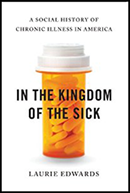
in-the-kingdomAs of yesterday, In the Kingdom of the Sick is officially available in bookstores and online.

I have so much more to say about all of this, and about writing and audience and lots of other things, but this week, I’m simply juggling virtual events, in-person events, the end-of-semester crunch, and the like.

So let me say the most important thing of all—thank you! To those of you in real life who have supported me and helped me find time to write, to those of you who are virtual cheerleaders, to those of you who gave me your time and insights along the way, and to all of you who have shared links, posted items, and plan to read the book. I can’t wait to hear your thoughts.

Yesterday, I had the pleasure of doing a Q&A with Paula Kamen over at Ms. Magazine’s blog. There are lots of other links to share in the coming days, but here’s an important update: my segment for Fresh Air will run tomorrow, April 11. The show runs 1-2pm; check your local public radio stations or listen online.

(I will be doing an Author event at Northeastern during that time, so you’ll hear it before I do. Be kind ☺)

Pre-Pub Date Announcements and Excitement

It’s hard to believe pub date is almost officially here! Some exciting pre-pub date links and announcements to share (and I promise a return to more regular posts and content soon):

Friday, the Wall Street Journal published a thoughtful and comprehensive review of In the Kingdom of the Sick. I had no idea they were reviewing it, so it was a most welcome surprise.

Today was a day of double duty for me. I had a piece on the potential consequences of the new DSM-5 diagnosis of Somatic Symptom Disorder on women living with pain published on WBUR’s CommonHealth. I was also incredibly lucky to be at WBUR, Boston’s NPR station, to tape an interview with Terry Gross for Fresh Air. It looks like the segment will run later this week, but I will confirm the date and details as soon as I can.

The virtual book tour is moving along nicely, and I am so grateful for all the people who are participating. Want to win a free copy of In the Kingdom of the Sick? Click on over to this great Q&A Allison Nimlos did at DiabetesMine and enter to win in the comments section. Allison asked some really insightful questions!

Edited to add: my undergraduate alma mater, Georgetown, published a nice article where we discussed both my books and chronic illness as a public health issue. Hoya Saxa!

Stay tuned for lots more exciting news, reviews, and events tomorrow and in the coming days—and remember, tomorrow is the day you can officially purchase the book online and in stores.

Virtual Book Tour: It Takes a Village

I can hardly believe that after all this time, the April 9th pub date for In the Kingdom of the Sick is practically here! There are all kinds of great posts, interviews, and other events in store next week—I really can’t wait to share them.

I am just as pleased to share this week’s virtual book tour events. This book is incredibly research-intensive (I joked to my father that the Bibliography was my prize achievement), but the patient stories are what draw the research out and advance it. To that end, I was so lucky to be able to interview some incredibly wise, insightful patients, physicians, and advocates. Their perspectives added so much to be book, and I was particularly interested to see their thoughts on the final product.

One such person is intrepid health blogger Duncan Cross, who reviewed In the Kingdom of the Sick this week. He writes, “You need this book because it is the best or only book that captures the full social picture of being sick in America.”

His review is comprehensive, and towards the end, he writes, “Now I want to say what it [the book] could be: the catalyst for a new community of people with chronic illness in America. Laurie feels (as do I) that for too long patients have been segregated by their diagnosis, when so much of what we endure and aspire is shared, is universal to the experience of illness. Too many of our dialogues and discussions begin with our diagnosis — as if Crohn’s and lupus and cancer can’t talk to each other. That keeps us from getting anywhere, from social progress — there’s a reason healthcare reform was a bust. But if we instead start from this book, from what is shared and universal, there’s so much we can do together.”

And that takeaway means so much.

Speaking of research and interview voices, a review up at How To Cope with Pain had this to say:

“As I finished the book, I had the image of Laurie as a master orchestra conductor. Laurie was able to lead all of us in creating a beautiful whole. A few notes of piano are nice, as are a violin melody. But taken together, a symphony can be moving and inspiring. “

And so more than ever, I am grateful for the people who gave me their time and insights as I wrote this book, and to all the writers and researchers before me whose work was so helpful.

Battle for Grace

It’s already a big spring for books about illness. I’ve written about The Last Best Cure and In Sickness As in Health, and now I’d like to introduce you to Cynthia Toussaint.

In the course of writing about gender and pain for In the Kingdom of the Sick, I interviewed Cynthia Toussaint several times. A former dancer whose life was turned upside down when a ballet injury turned into a serious, debilitating pain condition, Toussaint is the founder of For Grace, a nonprofit for women in pain. Her experiences having her pain dismissed and her suffering ignored, as well as her incredible story of unconditional love, make for a compelling read in Battle for Grace, her new memoir. In fact, Battle for Grace launched on Maria Shriver’s Architects of Change site.

Here is some more official information about Cynthia, as well as Battle for Grace:

“Cynthia Toussaint is the founder and spokesperson of For Grace (www.forgrace.org), an organization that fights to ensure the ethical and equal treatment of all women in pain. She has fostered two California Senate hearings on thunder-treatment of and gender bias toward women in pain and gave testimony at both events. Toussaint has appeared on more than 75 local and national television shows and featured in over 200 news stories, including ABC World News with Diane Sawyer, PBS, Discovery Health, The Learning Channel plus the New York Times and Newsweek, among many others. A recent media highlight was an invitation from Maria Shriver to launch Battle for Grace on her Architects of Change website. Toussaint lives in Los Angeles, CA, with her beloved John…

Toussaint takes readers on an extraordinary 30-year journey where a crippling mystery illness triggered uncontrolled violence that almost destroyed her. The story begins with a minor ballet injury at age 21 that grew into the chronic pain disease, Complex Regional Pain Syndrome. Her pain went undiagnosed for 13 years as doctors told her it was all in her head. Bedridden for a decade, she was unable to speak for five of those years and was often reduced to the violence that attacked both herself and John Garrett, the love of her life. John has remained at her side for 33 years. She lost the career she’d dreamed of as an actor, dancer, singer, the chance to have a child and very nearly John as well…But Cynthia somehow stuck with it, refusing to be a victim. In her battle to survive, she’s taken on the role of activist and aggressively challenges HMOs and pharmaceutical companies that put the unholy dollar ahead of patient care…”

I am grateful for Cynthia’s insights in my own book, and pleased to share the details of her new memoir.

Exciting News and Virtual Book Tour Events

The controversy over chronic Lyme disease and the way social media has so greatly influenced the trajectory of patient advocacy are issues I explore in detail in In the Kingdom of the Sick, so I am thrilled that Dorothy Leland posted a review of the book over at LymeDisease.org today. Please click on over and check it out, especially if you or someone you know has been impacted by Lyme disease.

In other book news, I have some exciting announcements:

I will be appearing on NPR’s Fresh Air with Terry Gross. I am a huge, huge fan of this show and am so excited for this opportunity. It looks like my segment will air Tuesday, April 16th, but I will post specific details on how to listen and confirmation of this as the date approaches.

C-SPAN BooK TV
will be taping my reading event at Brookline Booksmith on Wed, April 17th, at 7pm. If you’re local, Brookline Booksmith is one of the best independent bookstores in the Boston area and a great venue, and I would love to see you there! (Be advised events take place on the lower level of the store.) Please also pass along this event information to anyone you know in the Boston area who might be interested.

And since we’re talking dates, a reminder that I am also doing an author event at Northeastern University at noon on April 11, if a daytime event is more convenient for you.

Thanks so much!